
Interior design has shifted decisively away from sterile show-home minimalism and hyper-specific, fast-turnover micro-trends. Modern home decor centers on lived-in luxury: creating layered, functional spaces that feel personal, calm, and visually rich.
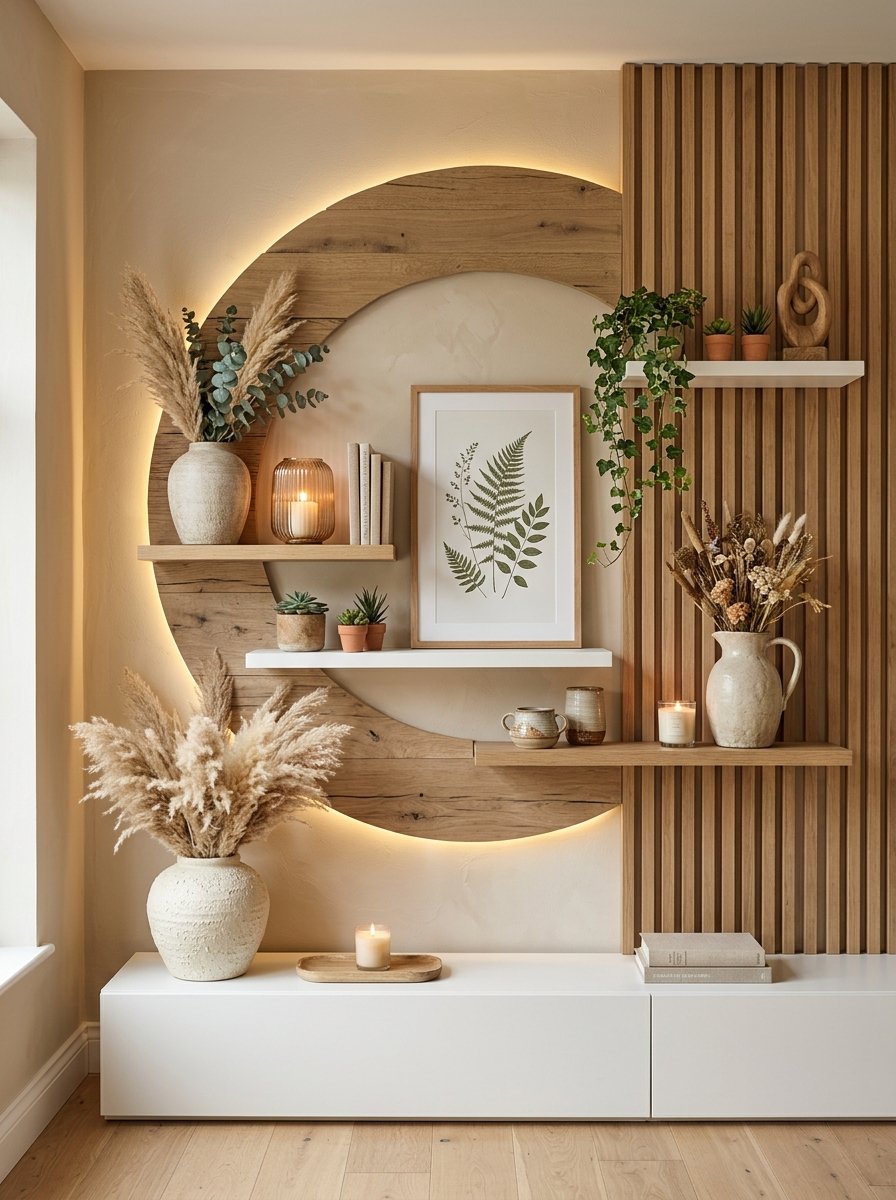
Designing a beautiful home does not require replacing all your furniture or strictly adhering to a single design catalog. It comes down to understanding spatial balance, layering natural materials, dialing in ambient lighting, and choosing purposeful accents that tell a coherent visual story.
1. The Core Philosophy: Spatial Flow and the 80/20 Rule
A well-designed room feels effortless because it balances visual weight, breathing room, and functional traffic flow through a clear structural foundation.
- The 80% Foundation: Focus the vast majority of your space on calm, timeless anchors. This includes neutral architectural elements such as hardwood or stone flooring, neutral wall tones like warm plaster, alabaster, or taupe, and large-scale foundational furniture such as solid-wood dining tables, tailored linen sofas, and wool area rugs.
- The 20% Expression: Use the remaining space for character and tactile tension. Introduce dynamic focal accents, sculptural accent chairs, vintage ceramics, brushed unlacquered brass hardware, curated artwork, and collected textiles.
Essential Rules of Spatial Balance
- Respect Clear Pathways: Keep primary walkways at least 30 to 36 inches wide to ensure natural, unobstructed movement between doorways, seating areas, and architectural focal points.
- Anchor with Correct Rug Scale: The most common living room mistake is an undersized rug. Ensure that at least the front two legs of all main seating pieces sit firmly on the rug to tie the conversation area together into a cohesive, grounded zone.
- Vary Heights and Horizons: Mix tall floor lamps and vertical bookshelves with low-slung seating and mid-height consoles. This dynamic skyline prevents a room from feeling flat or bottom-heavy.
2. Layering Organic Textures: Warmth Without Clutter
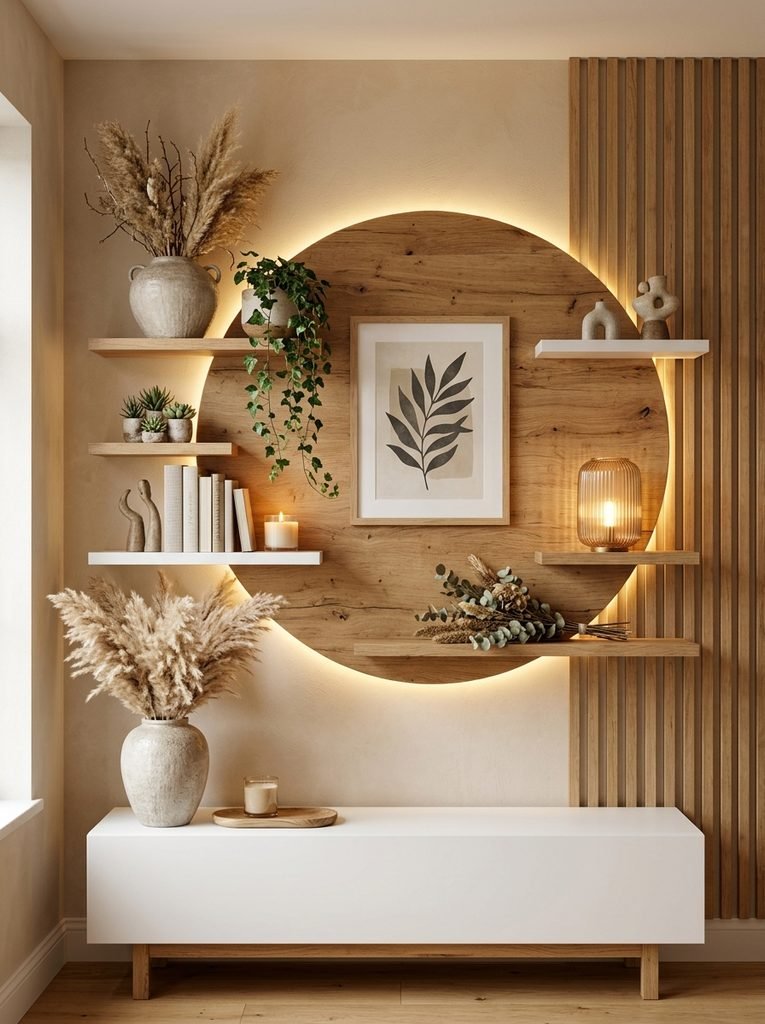
When a monochromatic or neutral space feels cold, the issue is rarely the color—it is an absence of tactile variation. Combining contrasting surfaces creates natural warmth and sophistication without introducing visual clutter.
- Matte and Organic Surfaces: Slubby Belgian linen, bouclé, wool flat-weaves, raw terracotta, and unglazed clay absorb light and add deep tactile comfort.
- Crisp and Structured Materials: Honed travertine, fluted solid oak, walnut, iron, and matte black steel establish clean structural lines and ground the room.
- Warm and Reflective Accents: Aged brass, bronze, smoked glass, and polished glazed ceramics catch ambient light and introduce subtle luxury.
Key Material Combinations
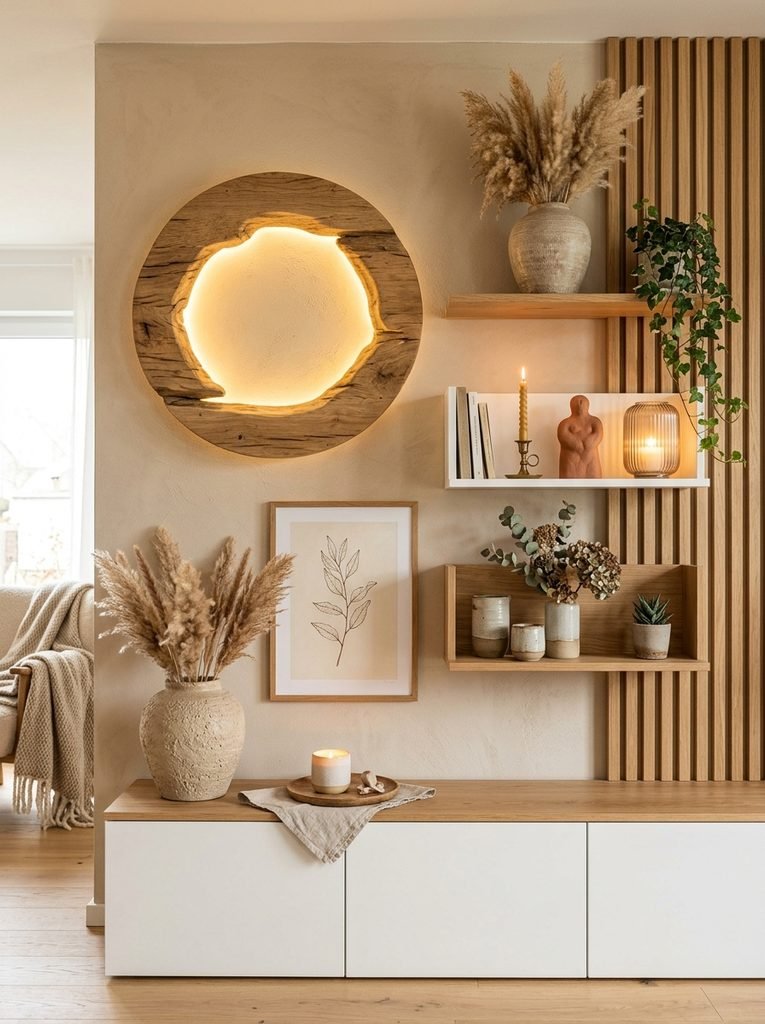
- Wood and Stone: Pair a honed, matte-edge travertine coffee table with a warm, open-grain white oak media console to balance cool mineral tones with rich timber grain.
- Linen and Leather: Soften a crisp, structured saddle-leather accent chair with an oversized, garment-washed Belgian linen throw pillow.
- Earthy Ceramics and Sleek Metal: Display unglazed, textured clay vessels alongside sleek brushed-bronze or blackened-steel task lamps.
3. The Three Layers of Lighting Architecture
Lighting dictates the emotional tone and functionality of an interior. Relying exclusively on high-output overhead ceiling lights creates harsh shadows and a sterile environment. A balanced room uses three distinct layers:
- Ambient Lighting: This provides soft, overall visibility across the entire room. Use flush mounts, paper pendants, or dimmable recessed lighting. Always choose warm bulbs within the 2700K to 3000K color temperature range.
- Task Lighting: This illuminates specific functional zones where focused activities occur. Position articulated reading sconces beside armchairs, desk lamps over workspaces, or warm under-cabinet LED strips along kitchen counters at elbow height.
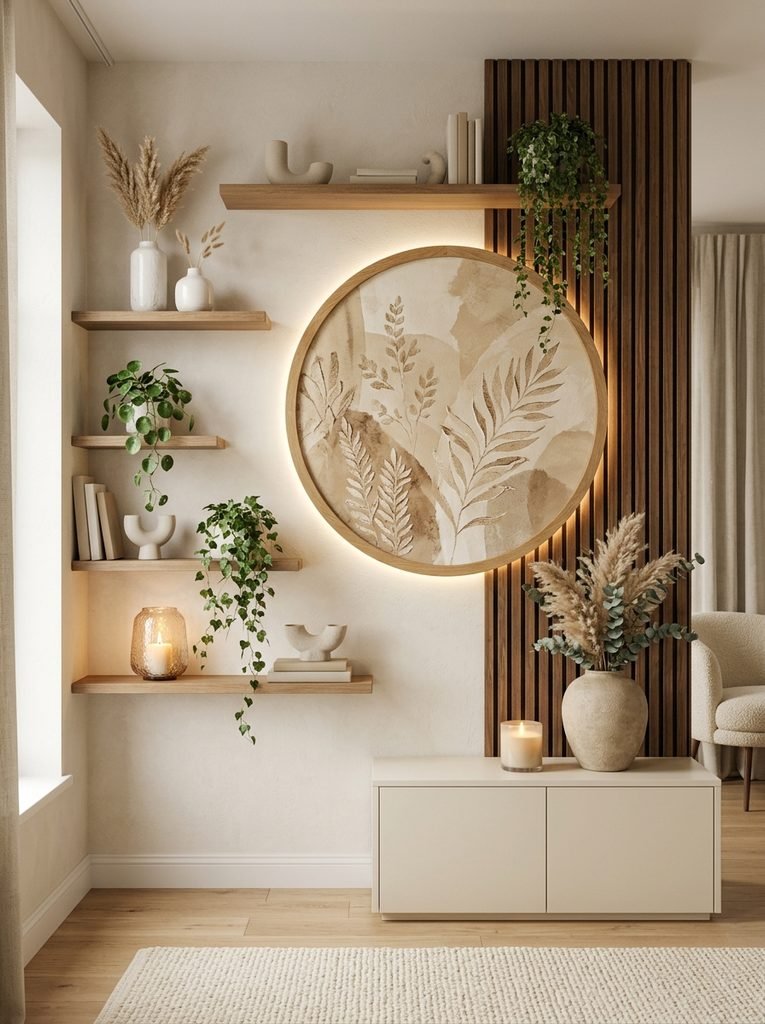
- Accent Lighting: This builds mood, depth, and drama by drawing the eye to specific focal points. Install slim picture lights above framed artwork, place low-wattage accent lamps on deep consoles, or use cordless, rechargeable mini-lamps tucked into bookshelves.
4. Styling Vignettes: The Art of the Surface
Consoles, open shelving, and coffee tables are ideal spaces to display curated collections without causing visual disarray.
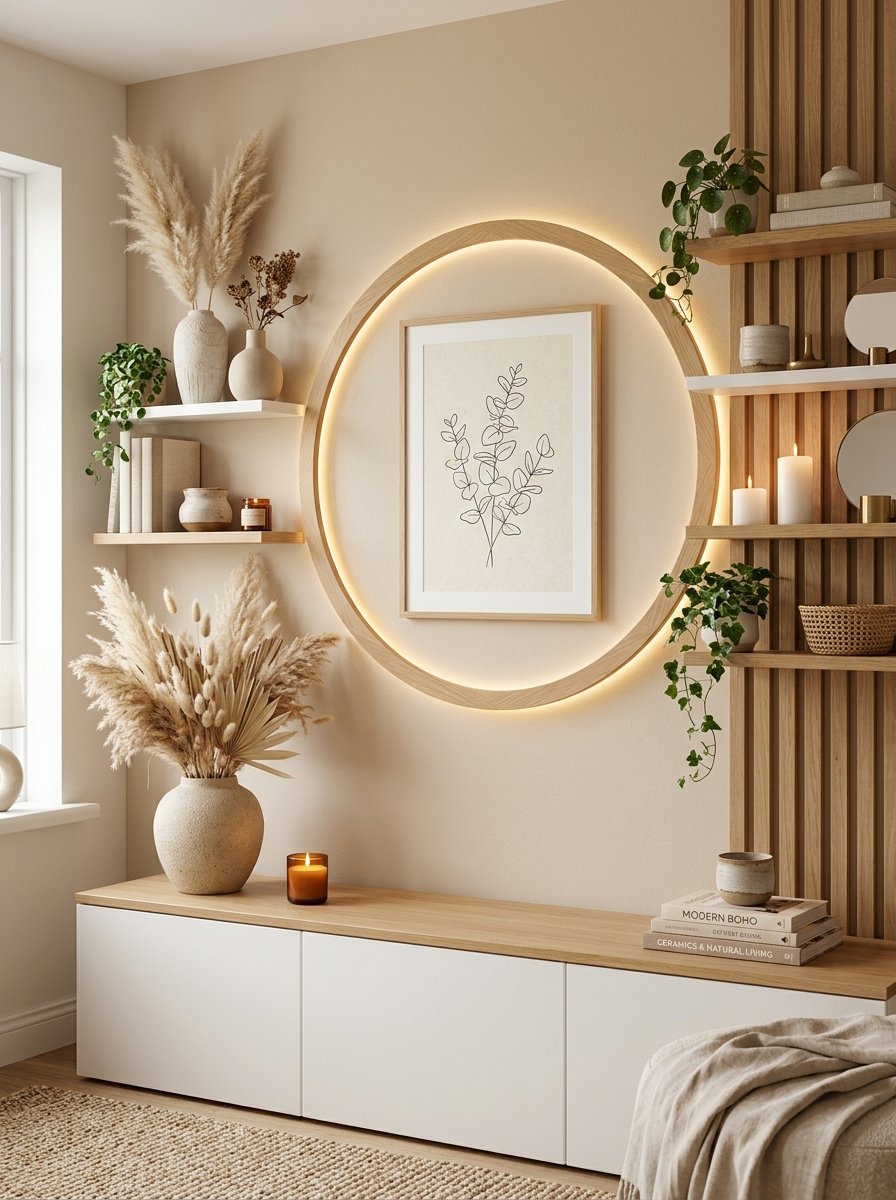
- The Rule of Threes: Group objects in odd numbers—most effectively in sets of three. Combine items of varied scales: one tall vertical element such as a sculptural vase with dried branches, one wide horizontal anchor such as a stack of linen-bound art books, and one small organic accent like a brass dish or smooth stone.
- Negative Space as Design: Resist the urge to fill every inch of available flat surfaces. Leaving 30% to 40% of shelf space completely clear allows the eye to rest and highlights your most meaningful pieces.
- Integrate Living Botanicals: A single oversized, architectural olive branch or sculptural fiddle-leaf fig stem in clear glass or rough stoneware brings organic movement and life into an angular room.
5. Intentional Scent and Sound: The Invisible Elements
True home decor engages all the senses, shaping how a space feels the moment you walk through the door.
- Signature Room Scenting: Move away from overpowering synthetic room sprays in favor of natural soy or beeswax candles, cold-air reed diffusers, and resinous incense featuring deep botanical notes of cedarwood, amber, hinoki, fig leaf, or vetiver.
- Acoustic Softening: Hard, echoing rooms feel clinical and cold. Absorb sound and build acoustic warmth by incorporating heavy linen drapery, plush natural-fiber area rugs, upholstered ottomans, and well-stocked bookshelves.